
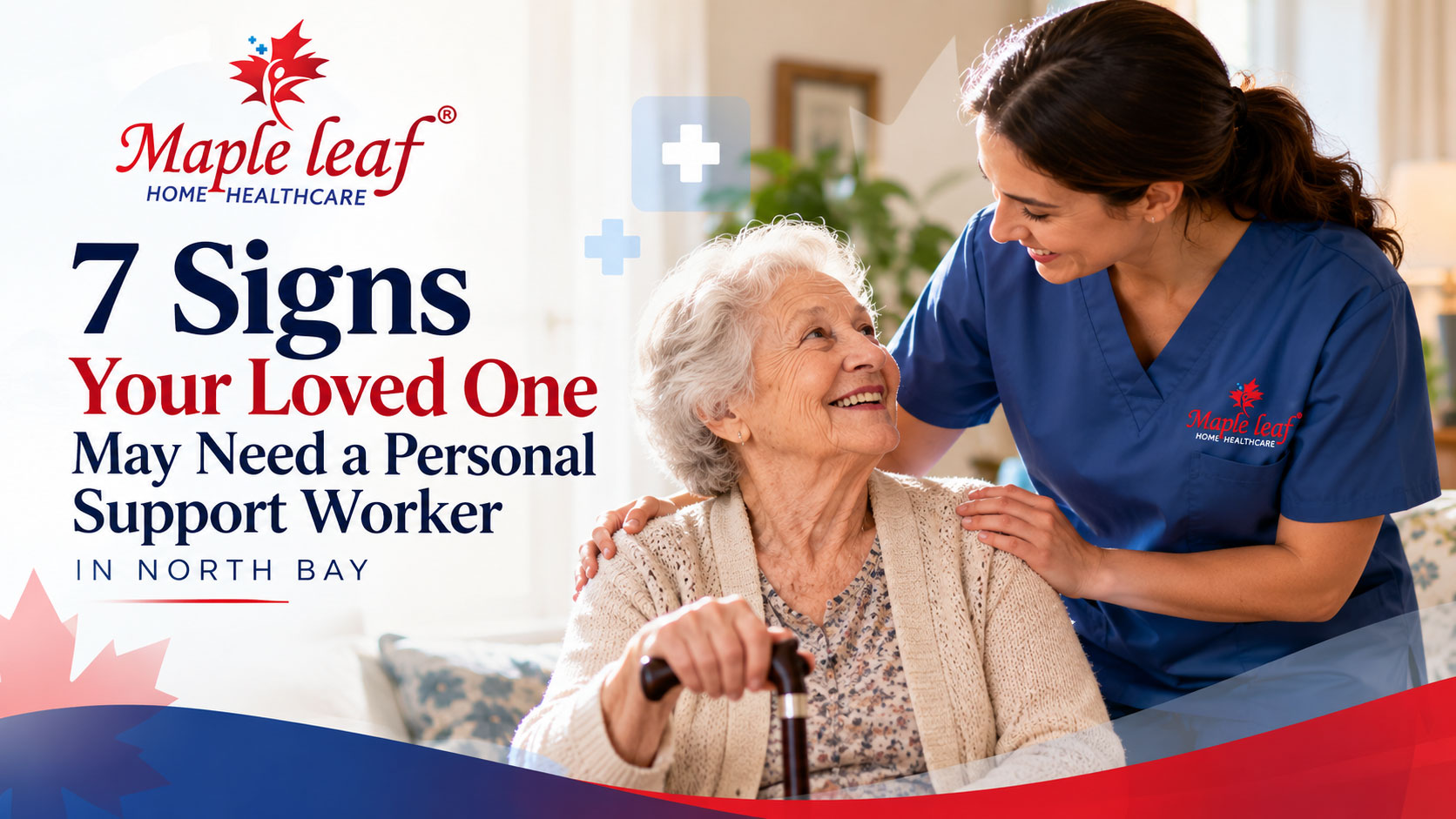
For many families, the need for professional home support does not appear all at once.
It often starts with small changes.
An older parent may need a little help getting dressed. Preparing meals may take longer. They may stop doing household tasks they once handled easily. Getting around the home may become more difficult.
At first, family members often step in.
A daughter visits more frequently. A son starts preparing meals. Someone takes over the laundry. Another family member begins helping with appointments.
Eventually, families may start asking:
“Does my loved one actually need a Personal Support Worker?”
A PSW can provide practical support with personal care and everyday activities, helping seniors and individuals who need assistance continue living at home. Ontario describes personal support services as including activities such as bathing, dressing, eating, toileting and assistance getting in and out of chairs, vehicles or beds.
Here are seven signs that it may be time to explore professional PSW support.
➪ Quick Answer: When Does a Senior Need a PSW?
A senior may benefit from PSW support when everyday activities such as personal care, dressing, bathing, meal preparation, mobility or household routines are becoming difficult to manage independently.
Professional support may also be worth considering when family caregivers are struggling to provide consistent assistance.
The goal is not to take away a senior’s independence.
It is to provide the right level of help while allowing the person to continue doing what they can safely do themselves.
➪ 1. Personal Care Is Becoming Difficult
One of the clearest signs that additional support may be needed is difficulty managing personal care.
A senior may begin struggling with:
- Bathing
- Dressing
- Grooming
- Personal hygiene
- Toileting
- Getting ready in the morning
- Getting ready for bed
These tasks can become challenging because of reduced mobility, weakness, balance concerns, pain, fatigue or other changes in physical ability.
Ontario’s home-care guidance identifies personal support services that can assist with bathing, dressing, eating, toileting, personal hygiene and getting in and out of chairs, vehicles or beds.
A PSW can provide appropriate assistance with these daily routines while maintaining dignity and respecting the individual’s preferences.
➪ 2. Mobility Around the Home Is Becoming Harder
Mobility changes can be gradual.
You may notice that your parent:
- Takes longer to get out of a chair
- Has difficulty getting in or out of bed
- Avoids stairs
- Needs help walking around the house
- Holds onto furniture while moving
- Needs assistance getting into a vehicle
- Has become less active
These changes do not automatically mean a PSW is the only solution.
Depending on the situation, physiotherapy or another healthcare assessment may also be appropriate.
However, if the main issue is assistance with everyday movement and routines, personal support services may be helpful.
Maple Leaf Home Healthcare’s PSW services include mobility support alongside personal care, meal preparation, light housekeeping and companionship.
➪ 3. Preparing Meals Has Become Difficult
Food preparation can become challenging when a senior has:
- Reduced strength
- Limited mobility
- Difficulty standing for long periods
- Difficulty using kitchen equipment
- Difficulty shopping for groceries
- Difficulty maintaining regular meal routines
A senior may still be capable of living independently but need assistance with certain parts of their daily routine.
PSW and homemaking support can help with appropriate daily activities such as meal preparation and household routines.
Ontario’s guidance also lists menu planning and meal preparation among homemaking services.
➪ 4. Household Tasks Are Starting to Build Up
A home that was once easy to maintain may gradually become more difficult to manage.
You may notice:
- Laundry accumulating
- Dishes not being completed
- Basic cleaning becoming difficult
- Groceries becoming harder to manage
- Household routines being neglected
This does not necessarily mean that someone needs intensive care.
Sometimes the person simply needs additional practical support with everyday living.
Maple Leaf combines PSW and homemaking support to assist with daily routines while helping seniors remain comfortable in their own homes.
➪ 5. Your Loved One Is Spending More Time Alone
Social connection is another part of everyday wellbeing.
A senior who lives alone may gradually become less active or less engaged with their normal routines.
They may:
- Stop going out
- Spend most of the day alone
- Avoid activities they previously enjoyed
- Have fewer opportunities for conversation
- Need encouragement to maintain a normal daily routine
Companionship can be part of appropriate home support.
A PSW’s role is not simply about completing tasks. Depending on the care arrangement, support can also help a senior maintain a more structured and connected daily routine.
➪ 6. Family Caregiving Is Becoming Difficult to Manage
This is one of the most important signs.
Family members often start by helping occasionally.
Then the responsibilities increase.
You may find yourself:
- Visiting every day
- Preparing meals
- Helping with bathing
- Managing household tasks
- Assisting with mobility
- Rearranging your work schedule
- Worrying when you cannot be there
At some point, the issue may no longer be whether your loved one needs help.
It may be whether the current caregiving arrangement is sustainable.
Ontario provides home and community support options for seniors and caregivers, including personal support and respite services.
Professional in-home support can allow family members to remain involved without having to manage every aspect of daily care themselves.
➪ 7. Your Loved One Wants to Stay at Home but Needs More Help
This is perhaps the most important consideration.
Needing assistance does not automatically mean a senior needs to leave their home.
Ontario’s home and community care guidance recognises that support can help seniors remain in their homes for as long as possible, with services including personal support, nursing and physiotherapy depending on eligibility and need.
A senior may simply need additional assistance with specific parts of the day.
For example:
Morning:
Help with bathing, dressing and breakfast.
Afternoon:
Assistance with mobility, meals or household routines.
Evening:
Help getting ready for bed and completing personal-care routines.
The appropriate schedule depends on the individual’s needs.
➪ What Can a Personal Support Worker Help With?
The exact services depend on the provider and care arrangement, but PSW support can include assistance with:
Personal Care
- Bathing
- Dressing
- Grooming
- Personal hygiene
- Toileting
Mobility
- Everyday mobility assistance
- Getting in and out of chairs
- Assistance with routines involving movement
- Safe support with daily activities
Daily Living
- Meal preparation
- Light housekeeping
- Household routines
- Companionship
Family Support
Professional home support can also give family caregivers additional help when they cannot be present.
Maple Leaf Home Healthcare provides Personal Support Worker and homemaking services designed around daily living needs, including mobility support, meal preparation, light housekeeping and companionship.
➪ PSW vs. Nurse: What’s the Difference?
This is an important distinction for families.
A Personal Support Worker primarily assists with personal care and everyday activities.
A nurse provides professional nursing care and can address clinical healthcare needs within their scope of practice.
For example, a senior may need:
PSW support
→ Bathing
→ Dressing
→ Personal care
→ Daily routines
→ Mobility assistance
Nursing support
→ Clinical nursing needs
→ Health assessments
→ Medication-related care as appropriate
→ Post-operative or medical support
Some individuals may need both.
Ontario distinguishes personal support services from professional services such as nursing and physiotherapy.
➪ When Physiotherapy May Also Be Appropriate
Sometimes a mobility problem is not simply about needing assistance.
The senior may need to improve their physical function.
This is where physiotherapy may be appropriate.
A physiotherapist may address areas such as:
- Strength
- Balance
- Mobility
- Flexibility
- Functional movement
- Rehabilitation
For example, if a senior is struggling to walk after surgery, a PSW may assist with daily activities while physiotherapy addresses rehabilitation.
The services can therefore complement one another rather than replace one another.
➪ How PSW Support Can Help Seniors Maintain Independence
Professional support should not automatically mean doing everything for the person.
The objective should be to provide assistance where it is needed while allowing the senior to remain involved in their own daily life.
For example:
Instead of preparing everything for the senior, a PSW may assist with the parts of meal preparation they cannot safely manage.
Instead of taking over every household task, support can focus on tasks that have become difficult.
Instead of replacing the person’s routine, professional support can work around the routine they already have.
This approach can help preserve dignity, choice and independence
➪ What Families Should Consider Before Arranging PSW Services
Before starting care, consider:
✅ What Does the Person Actually Need?
Write down the specific tasks that have become difficult.
✅ How Often Is Support Needed?
Some people need occasional assistance. Others need regular daily support.
✅ Is Mobility Part of the Problem?
If so, determine whether PSW assistance, physiotherapy or both may be appropriate.
✅ Are There Clinical Healthcare Needs?
If medication management, wound care or other clinical needs are involved, nursing support may also be required.
✅ Does the Care Plan Need to Change Over Time?
A senior’s needs can change. Choose a provider that can discuss adjustments as circumstances evolve.
➪ Why Local PSW Services in North Bay Can Be Useful
For families searching for PSW services in North Bay, local availability can make communication and coordination easier.
A local provider may also be able to connect families with other relevant home healthcare services when needs extend beyond personal support.
Maple Leaf Home Healthcare provides Personal Support Worker and homemaking services alongside nursing care, physiotherapy, foot care, wound management and other in-home services in North Bay and surrounding communities.
This means families can discuss their loved one’s needs more broadly rather than treating every care requirement as a separate issue.
➪ AEO Quick Answers
✅ How do I know if my parent needs a PSW?
Consider whether your parent is struggling with personal care, dressing, bathing, mobility, meals, household routines or other everyday activities.
✅ When should I hire a Personal Support Worker?
Consider PSW support when daily activities are becoming difficult to manage safely or consistently without assistance.
✅ What does a PSW help with?
Depending on the care arrangement, a PSW may assist with personal care, daily routines, mobility, meal preparation, light housekeeping and companionship.
✅ Can a PSW help an elderly person stay at home?
Yes. Personal support services can help seniors with daily activities while allowing them to continue living at home when appropriate.
✅ Can a PSW help with mobility?
PSWs can provide appropriate assistance with everyday mobility and daily activities. If the goal is to improve strength, balance or physical function, physiotherapy may also be appropriate.
✅ Does my parent need a PSW or a nurse?
It depends on their needs. PSWs primarily assist with personal care and daily activities, while nurses provide professional nursing care. Some people may need both.
✅ Can PSW services include meal preparation?
Depending on the provider and care arrangement, meal preparation can be part of homemaking or daily living support.
✅ Can a PSW help with bathing and dressing?
Yes. Personal support services can include assistance with bathing and dressing.
✅ Can PSW support help family caregivers?
Yes. Professional in-home support can provide assistance with daily care and may reduce the amount of hands-on caregiving required from family members.
✅ How can I arrange PSW services in North Bay?
Families can contact a local home healthcare provider to discuss the senior’s needs, available services and an appropriate care arrangement.
➪ Practical Checklist
If you are considering PSW support for a loved one, ask:
Personal Care
- Is bathing becoming difficult?
- Is dressing becoming difficult?
- Is personal hygiene becoming harder?
Mobility
- Is walking around the home becoming difficult?
- Does the person need help getting up or moving around?
Daily Living
- Is meal preparation becoming difficult?
- Are household tasks being neglected?
Family Care
- Are family members struggling to provide enough support?
- Is caregiving affecting work or other responsibilities?
Independence
- Does the senior want to continue living at home?
- What activities can they still safely do independently?
These questions can help families identify where additional support may be useful.
➪ How Maple Leaf Home Healthcare Can Help
Maple Leaf Home Healthcare provides personalized home healthcare services across North Bay and surrounding communities.
Its Personal Support Worker and Homemaking services can support:
- Personal care
- Daily routines
- Mobility
- Meal preparation
- Light housekeeping
- Companionship
The company also provides nursing care, physiotherapy, foot care, wound management and in-home consultations.
For families who are unsure what type of support their loved one needs, Maple Leaf offers in-home consultations to discuss individual care requirements.
➪ Conclusion
The need for a Personal Support Worker often becomes visible through small changes in everyday life.
Bathing takes longer.
Getting dressed becomes difficult.
Meals become harder to prepare.
Mobility becomes less comfortable.
Family members start taking on more responsibilities.
These changes do not automatically mean that a senior needs intensive care.
They may simply indicate that additional support at home could make daily life easier and safer.
For families in North Bay, understanding the available Personal Support Worker services can be a useful first step toward creating a care arrangement that supports both the senior and their family.
➪ Looking for PSW Services in North Bay?
If your loved one is finding everyday activities more difficult, Maple Leaf Home Healthcare can help you explore personalized Personal Support Worker and Homemaking Services at home.
Call 705-303-8787 to discuss your needs or arrange an in-home consultation.
Maple Leaf Home Healthcare
36 Lakeshore Drive, North Bay, ON P1A 2A1
Serving North Bay and surrounding communities.