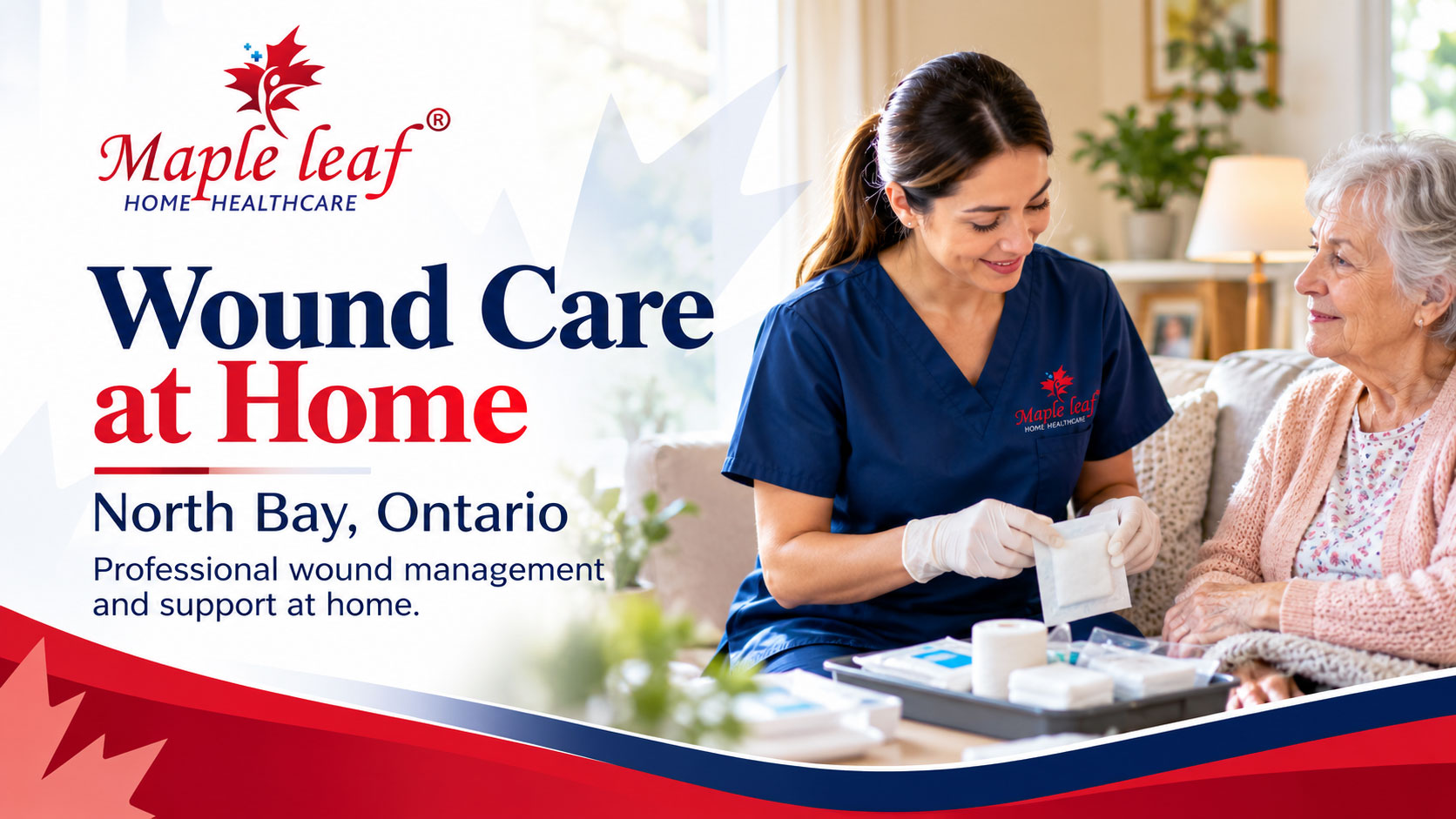
A wound may appear small at first, but proper care and monitoring can be important for healing, especially for older adults, people recovering from surgery and individuals living with certain chronic health conditions.
For families in North Bay, Ontario, managing a wound at home can raise questions about dressing changes, infection warning signs and when professional healthcare support may be necessary.
Professional wound care in North Bay can help individuals receive appropriate wound management and monitoring in the comfort of their homes. Maple Leaf Home Healthcare provides wound management services, including dressing changes, infection prevention and chronic wound management.
Understanding when to seek professional assistance can help families make informed decisions about wound care and recovery.
➩ What Is Professional Wound Care?
Wound care involves assessing, cleaning, protecting and monitoring an injury or damaged area of skin according to the person’s healthcare needs.
The appropriate approach depends on the type of wound, its location, severity, cause and stage of healing. Some minor wounds can be managed with basic first aid, while surgical wounds, chronic wounds and wounds affecting people with underlying health conditions may require professional assessment.
Professional wound management may include:
- Assessing the wound and surrounding skin.
- Performing dressing changes according to the care plan.
- Monitoring changes in the wound’s appearance.
- Identifying possible signs of infection or delayed healing.
- Following appropriate infection prevention practices.
- Communicating concerns to the relevant healthcare professional.
Wound care requirements vary between individuals. A qualified healthcare professional can determine the appropriate treatment and monitoring plan.
➩ When Should You Consider Professional Wound Care at Home?
Some wounds require more attention than routine first aid. Families should consider seeking professional advice when a wound is complex, healing slowly or difficult to manage safely.
✍️ 1. Wounds That Are Slow to Heal
A wound that does not appear to be healing as expected may need professional assessment. The cause can vary, so it is important not to assume that simply changing the dressing more frequently will solve the problem.
A healthcare professional can assess the wound and advise whether additional treatment or follow-up is required.
✍️ 2. Wounds Following Surgery
After surgery, wound care instructions may include keeping the area clean, protecting the incision and changing dressings according to clinical guidance.
If a person has difficulty managing these instructions independently, professional nursing support may help with wound monitoring and prescribed dressing changes.
Follow the surgeon’s instructions and contact the healthcare team if the wound opens, bleeding increases or healing concerns develop.
✍️ 3. Chronic or Recurrent Wounds
Some wounds persist or repeatedly reopen. Chronic wounds can require ongoing assessment and a care plan tailored to the underlying cause.
People with diabetes, circulation problems or other health conditions may need particular attention because wound healing can be more complicated.
Professional wound management can help ensure that changes are monitored and concerns are communicated to the appropriate healthcare provider.
✍️ 4. Wounds That Are Difficult to Manage at Home
A wound may be located somewhere that is difficult for the individual or family caregiver to reach. Limited mobility, discomfort or uncertainty about dressing techniques can also make wound care challenging.
Where clinically appropriate, in-home wound care can provide support without requiring every dressing-related task to be managed independently by the patient or family.
➩ Warning Signs of a Wound Infection
Recognising changes in a wound is important. Infection can sometimes worsen and may require prompt medical assessment.
Contact a healthcare professional promptly if you notice:
- Increasing redness around the wound.
- New or worsening warmth or swelling.
- Increasing or persistent pain.
- Pus or unusual discharge.
- An unpleasant or newly developing odour.
- Fever or chills.
- Red streaks extending away from the wound.
- A wound that is opening, enlarging or deteriorating.
These signs do not establish a diagnosis on their own, but they should not be ignored.
Seek urgent medical attention for severe or rapidly worsening symptoms, uncontrolled bleeding, confusion or signs of serious illness. Do not wait for a home-care appointment when emergency assessment may be necessary.
For additional guidance, consult HealthLink BC’s information on wound infection warning signs.
➩ Why Wound Care Can Be More Complicated for Seniors
Age alone does not determine how a wound will heal. However, some older adults have additional health or practical challenges that can affect wound management.
✍️ Reduced Mobility
Individuals who have difficulty moving may find it harder to inspect a wound, change a dressing or maintain the position recommended by their healthcare professional.
In-home assistance may help address practical difficulties while following the prescribed care plan.
✍️ Underlying Health Conditions
Conditions affecting circulation, sensation or the body’s ability to heal can make certain wounds more complicated. Diabetes is one example.
People with these conditions should seek appropriate professional guidance rather than relying solely on home remedies or general wound-care instructions.
✍️ Difficulty Following Dressing Instructions
Some wounds require specific dressing materials, change schedules or precautions. Confusion about these instructions can lead to inappropriate wound care.
A qualified healthcare professional can explain the prescribed routine and identify when reassessment is necessary.
➩ What Does In-Home Wound Management Involve?
In-home wound management allows eligible individuals to receive appropriate wound-related support in their home, subject to the provider’s services and clinical assessment.
The exact care provided depends on the wound and the person’s needs.
✍️ Wound Assessment and Monitoring
A healthcare professional can assess the wound within their scope of practice and monitor relevant changes over time.
This may include observing the wound’s size, appearance, surrounding skin and other features relevant to the treatment plan.
✍️ Dressing Changes
Dressings help protect wounds, but the correct product and change schedule depend on the type of wound and clinical instructions.
Professional assistance can help ensure that dressing changes are carried out according to the prescribed care plan.
✍️ Infection Prevention
Appropriate wound-care practices include following hygiene procedures, using suitable supplies and monitoring for signs that may require further assessment.
Wound management does not eliminate the risk of infection, so ongoing observation and appropriate escalation remain important.
✍️ Communication With the Healthcare Team
When a wound changes or fails to improve as expected, communication with the relevant healthcare professional is important.
Depending on the situation, the care team may recommend reassessment, a change in treatment or referral for additional medical care.
➩ How to Prepare Your Home for Wound Care
Families can make wound-care visits easier by preparing a clean, organised space and keeping relevant information available.
Consider the following steps:
- Keep the area where care will take place clear and accessible.
- Have the existing wound-care instructions available.
- Keep relevant medical information and medication lists organised.
- Tell the healthcare professional about any allergies, sensitivities or changes noticed.
- Make a note of new symptoms or concerns since the previous assessment.
- Follow the professional’s instructions for storing and disposing of wound-care supplies.
Do not remove prescribed dressings, apply unapproved products or change the care routine unless instructed by an appropriate healthcare professional.
➩ Wound Care at Home in North Bay: How Maple Leaf Home Healthcare Can Help
Finding suitable wound management support can be important for individuals who need ongoing care while remaining at home.
Maple Leaf Home Healthcare provides wound management services in North Bay and surrounding communities. Its published services include dressing changes, infection prevention and chronic wound management.
Depending on the individual’s circumstances, the team can discuss whether its wound management services are appropriate and explain the next steps.
✍️ Home Nursing Care
Some individuals need nursing support alongside wound management. Maple Leaf also provides home nursing care, which may be relevant when a person needs additional clinical support at home.
The appropriate service depends on the person’s assessed needs and the scope of care required.
✍️ Personal Support and Daily Living Assistance
A wound may make everyday activities more difficult. Personal Support Worker and Homemaking services can assist with agreed daily living tasks, including mobility support, meal preparation and light housekeeping.
These services complement wound care but do not replace clinical wound assessment or nursing treatment.
Learn more about Maple Leaf Home Healthcare’s services.
✍️ 1. Where can I find wound care services in North Bay?
Individuals and families can contact local home healthcare providers to ask about wound assessment, dressing changes and ongoing wound management. Maple Leaf Home Healthcare lists wound management among its services. Contact the team to confirm availability and suitability.
✍️ 2. Can wound care be provided at home?
Yes. Depending on the wound and the person’s clinical needs, appropriate wound management can sometimes be provided at home by a qualified healthcare professional.
✍️ 3. When should I seek professional wound care?
Consider professional advice when a wound is slow to heal, difficult to manage, related to surgery or requires specialised dressing changes. Seek prompt medical assessment if there are signs of infection or deterioration.
✍️ 4. What are the signs of an infected wound?
Warning signs can include increasing redness, warmth, swelling, pain, pus, red streaks, fever or chills. These symptoms require appropriate medical assessment, particularly if they are worsening.
✍️ 5. Can a nurse change a wound dressing at home?
Home nursing services may include wound-related care and dressing changes when these are within the nurse’s scope of practice and the service provider’s care arrangements. Confirm the specific service before booking.
✍️ 6. Is chronic wound management different from caring for a minor cut?
Yes. Chronic wounds may require assessment of the underlying cause, ongoing monitoring and a tailored treatment plan. A minor cut and a persistent wound should not automatically be managed in the same way.
✍️ 7. Does Maple Leaf Home Healthcare offer wound management?
Maple Leaf Home Healthcare lists wound management, including dressing changes, infection prevention and chronic wound management, among its services in North Bay and surrounding communities.
✍️ 8. How do I arrange wound care with Maple Leaf Home Healthcare?
Contact Maple Leaf Home Healthcare to discuss the wound-care needs, the individual’s location and the type of assistance required. The team can explain the available services and appropriate next steps.
➩ Arrange Professional Wound Care Support
Wound management can require careful monitoring, appropriate dressing changes and timely communication with healthcare professionals. When wound care becomes difficult to manage independently, families can explore whether professional support at home is suitable.
Maple Leaf Home Healthcare provides wound management and other home healthcare services in North Bay and surrounding communities.
Contact Maple Leaf Home Healthcare
Phone: 705-303-8787
Toll-free: 1-888-393-0001
Website: https://mlhealthcare.ca/
Address: 36 Lakeshore Drive, North Bay, Ontario, P1A 2A1
Contact the team to discuss wound management services and ask about a free in-home consultation.
Internal linking strategy
👉 Maple Leaf Home Healthcare’s services
👉 Personal Support Worker and Homemaking services
👉 Contact Maple Leaf Home Healthcare