
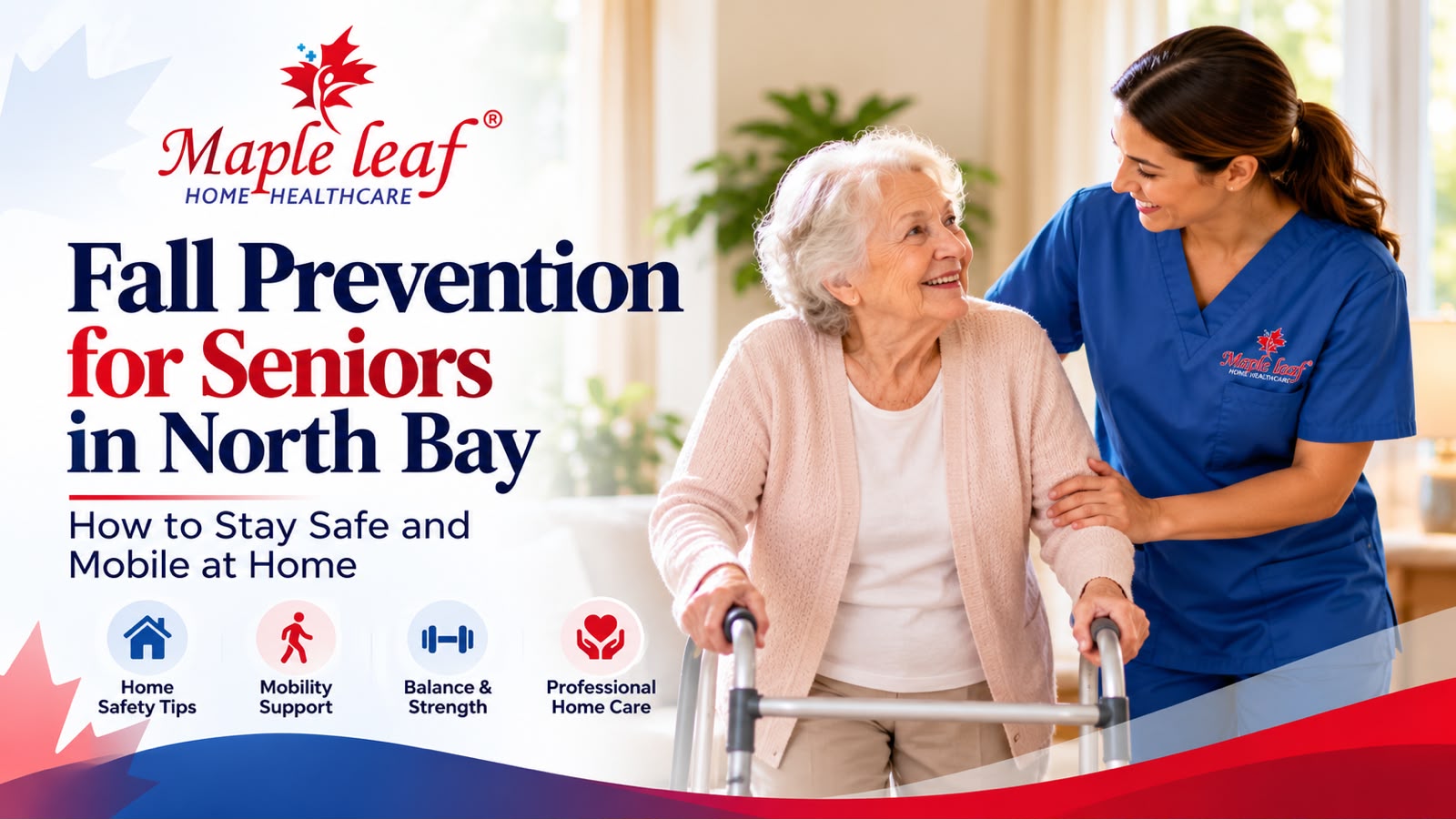
For many seniors, staying independent at home is an important part of maintaining their everyday routine and quality of life.
But mobility can change with age.
A senior may become less steady on their feet, have difficulty getting up from a chair, feel uncomfortable using stairs or become more cautious about walking around the house.
These changes can increase the risk of falling.
Falls are a significant health concern for older adults in Canada. Public Health Agency of Canada guidance identifies falls as a major cause of injury among older adults and highlights factors such as poor balance, muscle weakness, vision problems, unsuitable footwear and hazards around the home.
The good news is that fall prevention is not only about reacting after a fall happens.
Families can take practical steps to make the home safer, support mobility and identify when professional assistance may be appropriate.
For seniors in North Bay, this can include a combination of home safety, mobility support, physiotherapy, Personal Support Worker services and personalized home healthcare.
👉 Quick Answer: How Can Seniors Prevent Falls at Home?
Seniors can reduce their risk of falling by keeping walkways clear, improving lighting, using appropriate footwear, addressing bathroom and stair hazards, maintaining strength and balance, and getting professional support when mobility changes.
Canada’s fall-prevention guidance specifically recommends reducing tripping hazards, improving lighting, maintaining strength and balance, using appropriate safety aids and making practical changes to the home environment.
For seniors who are already experiencing mobility difficulties, a physiotherapy assessment or appropriate home-care support may also be beneficial.
👉 Why Fall Prevention Matters for Seniors
A fall can affect much more than physical health.
After a fall, some seniors may become afraid of falling again and reduce their normal activity.
This can create a cycle:
Less movement → reduced strength and confidence → greater mobility difficulty → increased fall risk.
Canada’s Safe Living Guide notes that limiting activity because of fear of falling can contribute to loss of strength and flexibility.
That is why a good fall-prevention strategy should address both:
The environment
and
the person’s physical mobility.
👉 10 Practical Fall Prevention Tips for Seniors
❎ 1. Remove Tripping Hazards
Look around the home for objects that could cause someone to trip.
Check for:
- Loose rugs
- Electrical cords
- Clutter
- Small furniture in walking paths
- Uneven flooring
- Objects left on stairs
- Items that require walking around unnecessarily
Keeping commonly used walking routes clear is one of the simplest steps families can take.
❎ 2. Improve Lighting
Poor lighting can make it harder to identify obstacles.
Pay particular attention to:
- Hallways
- Stairways
- Bedrooms
- Bathrooms
- Entrances
- The route between the bedroom and bathroom
Nightlights can be particularly useful for seniors who need to get up during the night.
Health Canada recommends good lighting throughout the home and nightlights where appropriate.
❎ 3. Make the Bathroom Safer
Bathrooms can present several fall hazards because of water, slippery surfaces and transfers between sitting and standing.
Depending on the individual’s needs, families can consider:
- Non-slip surfaces
- Properly installed grab bars
- Shower seating
- Appropriate bathroom supports
- Keeping the floor dry
- Adequate lighting
Health Canada specifically identifies bathrooms as an area requiring attention when planning fall prevention for seniors.
❎ 4. Pay Attention to Stairs
Stairs can become more difficult when balance, strength or vision changes.
Consider:
- Secure handrails
- Good lighting
- Clear steps
- Non-slip surfaces where appropriate
- Avoiding unnecessary items on stairs
- Taking time rather than rushing
If stairs have become particularly difficult, a mobility assessment may help determine what additional support is appropriate.
❎ 5. Encourage Safe Movement
Avoiding all physical activity because of fear of falling may not be the best long-term approach.
Appropriate physical activity can help maintain strength and balance.
However, exercise should be appropriate for the individual’s health and physical abilities.
If a senior has significant mobility concerns, pain, recent surgery, a neurological condition or a history of falls, professional assessment may be appropriate before starting a new exercise routine.
❎ 6. Pay Attention to Footwear
Footwear can affect stability.
Seniors should use footwear that fits properly and provides appropriate support.
Avoid footwear that is loose, unstable or difficult to walk in.
Health Canada includes appropriate footwear among the factors that can help reduce fall risk.
❎ 7. Look at Changes in Mobility
Sometimes the earliest warning sign is not a fall.
It may be a gradual change such as:
- Walking more slowly
- Holding onto furniture
- Avoiding stairs
- Difficulty getting out of a chair
- Becoming less active
- Needing assistance around the house
- Avoiding outdoor activities
These changes are worth paying attention to.
Early support may help families understand what is contributing to the mobility problem.
❎ 8. Consider Physiotherapy for Mobility and Balance
Physiotherapy can play an important role when a senior’s strength, balance, movement or physical function has changed.
Depending on the individual’s needs, physiotherapy may address:
- Strength
- Balance
- Mobility
- Flexibility
- Functional movement
- Rehabilitation
- Recovery after injury or surgery
Maple Leaf Home Healthcare provides physiotherapy services designed to support seniors’ strength, mobility and independence.
For seniors who find travelling to a clinic difficult, in-home physiotherapy can bring treatment into the home environment.
❎ 9. Consider Personal Support When Daily Mobility Becomes Difficult
Not every mobility problem requires physiotherapy.
Sometimes the senior simply needs assistance with everyday activities.
A Personal Support Worker can provide appropriate support with daily routines, including mobility assistance, personal care, meal preparation, light housekeeping and companionship.
Maple Leaf’s PSW and Homemaking service specifically includes mobility support as part of its daily living assistance.
This can be particularly useful when a senior wants to remain at home but needs additional help managing everyday routines.
❎ 10. Review the Home as the Senior’s Needs Change
A home that was safe several years ago may not remain equally suitable as mobility changes.
Families should periodically review:
- Bathroom safety
- Bedroom access
- Stairs
- Lighting
- Flooring
- Entrances
- Walking paths
- Frequently used furniture
- Accessibility
Fall prevention should be an ongoing process rather than a one-time checklist.
👉 Common Fall Risk Factors in Older Adults
Several factors can contribute to falls.
❎ Balance Changes
Reduced balance can make it harder to recover from a trip or sudden change in movement.
❎ Reduced Muscle Strength
Lower-body strength is particularly important for standing, walking and navigating stairs.
❎ Vision Changes
Difficulty seeing obstacles can increase the risk of tripping.
❎ Unsafe Home Conditions
Clutter, loose rugs, poor lighting and slippery surfaces can create avoidable hazards.
❎ Reduced Mobility
When normal movement becomes difficult, everyday activities can become less predictable.
❎ Fear of Falling
Fear may cause a senior to become less active, which can affect strength and confidence over time.
Canada’s current fall-prevention guidance identifies many of these factors and recommends addressing both physical and environmental risks.
👉 When Should a Senior Consider Professional Mobility Support?
Families should consider professional support when:
- Walking has noticeably changed
- Balance is becoming less reliable
- A senior has experienced a fall
- Getting out of a chair is difficult
- Stairs have become challenging
- The person is avoiding normal activities
- Mobility is affecting personal care
- A previous injury or surgery has affected movement
- Family members are struggling to provide physical assistance safely
The appropriate service depends on the individual’s needs.
It may involve physiotherapy, PSW support, nursing care or a combination of services.
👉 PSW Support vs Physiotherapy for Senior Mobility
These services can complement each other but have different roles.
❎ Physiotherapy
Primarily focuses on physical function, rehabilitation, movement, strength, balance and mobility.
❎ Personal Support Worker
Provides appropriate assistance with personal care and daily activities, including mobility support.
For example:
❎ Physiotherapy
→ Helps work on strength and balance.
❎ PSW support
→ Helps with everyday activities and mobility routines.
❎ Home nursing
→ Supports clinical healthcare needs when required.
A senior may require one service or a combination depending on their circumstances.
Maple Leaf Home Healthcare offers all three areas as part of its broader home healthcare services.
👉 A Simple Fall Prevention Checklist for Families
❎ Home
- Walking paths are clear
- Loose rugs are removed or secured
- Stairs are well lit
- Handrails are secure
- Bathroom has appropriate safety supports
- Nightlights are available
- Floors are kept dry
❎ Mobility
- Senior can move safely around the home
- Balance has not noticeably declined
- Chair and bed transfers are manageable
- Appropriate footwear is being used
- Mobility changes are being monitored
❎ Professional Support
- Physiotherapy considered if mobility has declinedPSW support considered if daily activities are difficult
- Nursing support considered when clinical needs are present
- Family knows who to contact if needs change
👉 Common Questions About Senior Fall Prevention
❎ How can seniors prevent falls at home?
Seniors can reduce fall risk by removing tripping hazards, improving lighting, using appropriate footwear, making bathrooms and stairs safer, maintaining strength and balance, and addressing mobility changes early.
❎ What are the biggest fall hazards for seniors at home?
Common hazards include clutter, loose rugs, poor lighting, slippery surfaces, unsafe stairs and bathroom hazards.
❎ Does physiotherapy help prevent falls in seniors?
Physiotherapy can address areas such as strength, balance, mobility and functional movement, which may be important components of a broader fall-prevention plan.
❎ Can a PSW help prevent falls?
A PSW can provide appropriate assistance with daily activities and mobility. They can also help seniors manage routines more safely within the scope of their role.
❎ How can I make my elderly parent’s home safer?
Start with walking paths, lighting, stairs, bathrooms, flooring and frequently used areas. Then consider whether the senior’s mobility or daily activities require professional support.
❎ Should an elderly person exercise after a fall?
The appropriate activity depends on the person’s condition and whether they have an injury. After a fall, appropriate medical or healthcare assessment should be considered, particularly if there is pain, injury or a significant change in mobility.
❎ When does a senior need mobility support?
Mobility support may be appropriate when walking, balance, transfers, stairs or everyday movement become difficult or less safe.
❎ Can seniors receive physiotherapy at home?
Yes. In-home physiotherapy is an option offered by Maple Leaf Home Healthcare for individuals who require physiotherapy support at home.
❎ Can home healthcare help seniors remain independent?
Home healthcare can provide different types of support based on individual needs, including PSW services, physiotherapy and nursing care.
❎ Where can I find senior fall prevention support in North Bay?
Families can speak with a local home healthcare provider about mobility, home support and other services that may be appropriate for their loved one.
👉 Fall Prevention and Aging at Home
Fall prevention is ultimately about more than avoiding an injury.
It is about helping seniors remain confident and functional in their own environment.
A good approach combines:
Safer home environment
+
Maintained mobility
+
Appropriate professional support
+
Regular attention to changing needs
This can help families make informed decisions as their loved one’s needs evolve.
👉 How Maple Leaf Home Healthcare Can Help
Maple Leaf Home Healthcare provides personalized home healthcare services across North Bay and surrounding areas.
Services include:
- Home Nursing Care
- Personal Support Worker & Homemaking
- Physiotherapy
- Foot Care
- Wound Management
- In-Home Consultation
Its PSW services include daily living assistance, mobility support, meal preparation, light housekeeping and companionship, while its physiotherapy services focus on mobility, strength and physical function.
For families who are unsure what type of support their loved one needs, Maple Leaf also offers free in-home consultations to assess needs and discuss a personalized care plan.
👉 Conclusion
Fall prevention for seniors begins with understanding that falls are influenced by more than age alone.
Mobility, strength, balance, footwear, vision and the home environment can all play a role.
Small changes to the home can reduce avoidable hazards, while appropriate physiotherapy and home-care support can help address mobility and daily living challenges.
For seniors in North Bay who want to continue living at home, taking action early can be an important part of maintaining safety, mobility and independence.
❎ Looking for Senior Mobility or Home Care Support in North Bay?
If your loved one is experiencing mobility changes, difficulty with daily activities or concerns about staying safe at home, Maple Leaf Home Healthcare can help you explore appropriate support.
Call 705-303-8787 to discuss your needs or arrange a free in-home consultation.
Maple Leaf Home Healthcare
36 Lakeshore Drive, North Bay, ON P1A 2A1
Serving North Bay and surrounding communities.