
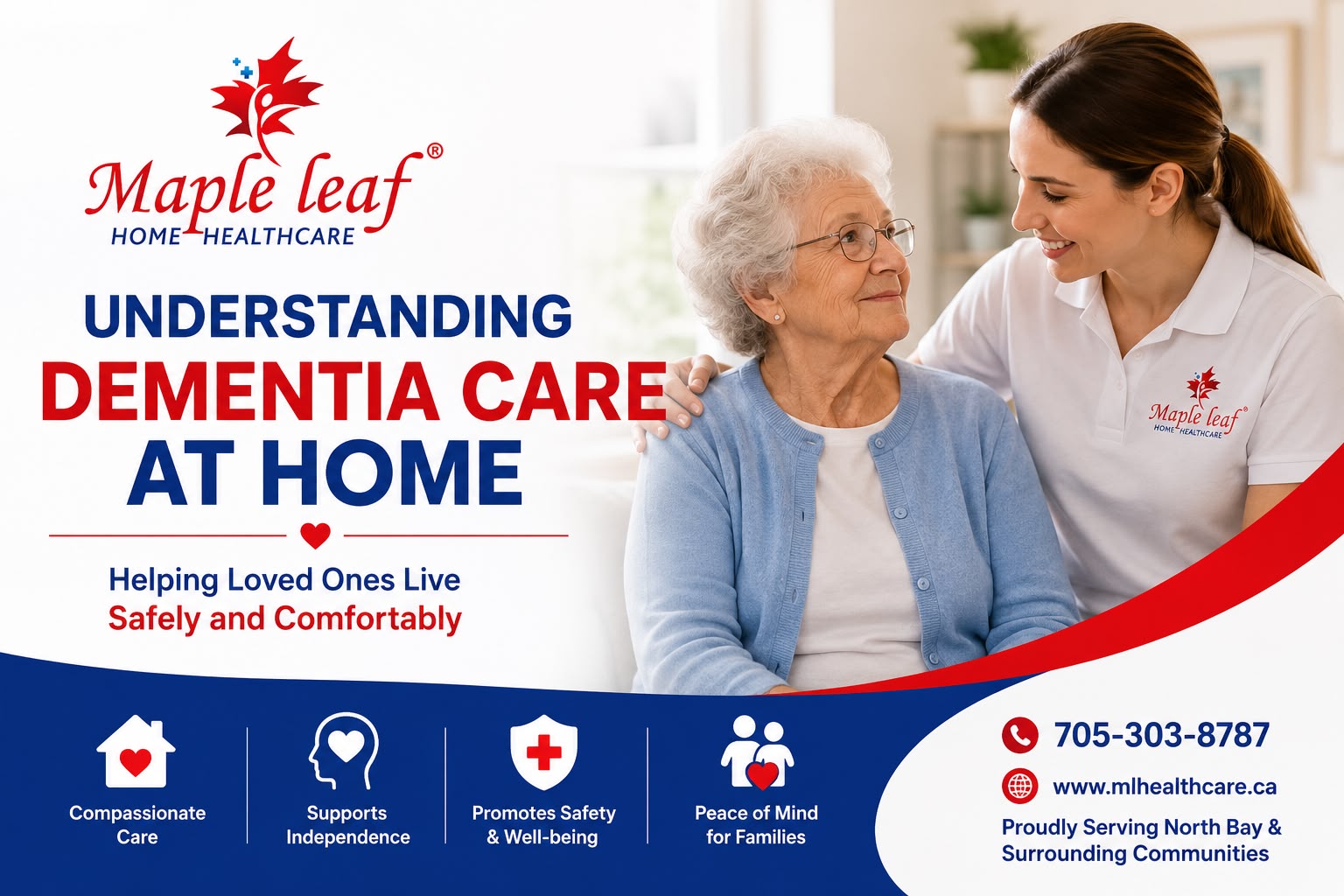
Watching someone you love experience memory loss can be one of life’s most emotional challenges. The little moments begin to change—misplaced keys become forgotten appointments, familiar faces become difficult to recognize, and everyday routines suddenly require assistance.
While dementia changes many aspects of daily life, it doesn’t change the person’s need for dignity, comfort, and meaningful human connection.
For many families, one question comes up early in the journey:
“Can Mom or Dad continue living safely at home?”
In many cases, the answer is yes—with the right support.
A familiar home environment often provides comfort, reduces stress, and helps individuals living with dementia maintain their routines for as long as possible. Combined with compassionate professional care, home can continue to be the safest and most reassuring place to live.
At Maple Leaf Home Healthcare, we believe dementia care is about much more than managing symptoms. It’s about preserving independence, respecting individuality, and helping families navigate each stage with confidence and compassion.
✍️ What Is Dementia?
Dementia is not a single disease.
It is a general term used to describe a group of conditions that affect memory, thinking, communication, judgement, and the ability to perform everyday activities.
Alzheimer’s disease is the most common form, but there are several other types of dementia, each affecting people differently.
Someone living with dementia may experience:
- Memory loss
- Difficulty finding words
- Confusion with time or place
- Changes in mood or personality
- Trouble completing familiar tasks
- Difficulty making decisions
Symptoms usually develop gradually and change over time, making early support especially important.
✍️ Why Home Is Often the Best Place for Dementia Care
Familiar surroundings provide reassurance.
People living with dementia often rely on routines and familiar environments to feel secure. Remaining at home can reduce confusion while allowing them to continue enjoying everyday comforts that have been part of their lives for years.
Home-based care also allows individuals to:
- Stay in familiar surroundings
- Follow established routines
- Maintain independence
- Remain close to family and friends
- Experience less stress than relocating to an unfamiliar setting
With professional support, many seniors are able to continue living safely at home while maintaining a better quality of life.
✍️ Early Signs Families Should Never Ignore
Recognizing changes early allows families to seek guidance before daily challenges become overwhelming.
Some common warning signs include:
- Frequently forgetting recent conversations
- Asking the same questions repeatedly
- Difficulty managing medications
- Missing appointments
- Becoming lost in familiar places
- Noticeable personality or mood changes
- Difficulty handling finances
- Increased confusion with everyday tasks
While occasional forgetfulness is a normal part of aging, persistent changes deserve medical attention.
Early diagnosis opens the door to better planning and appropriate care.
✍️ Creating a Safe Home Environment
As dementia progresses, small changes around the home can make a significant difference.
Simple adjustments include:
- Removing trip hazards and loose rugs
- Improving lighting throughout the home
- Installing grab bars in bathrooms
- Keeping pathways clear
- Organizing commonly used items
- Using labels or reminders where helpful
- Ensuring medications are safely managed
These changes help reduce risks while encouraging greater confidence during daily activities.
Safety doesn’t mean removing independence—it means supporting it.
✍️ Supporting Independence Through Daily Routines
Consistency brings comfort.
Daily routines help reduce anxiety by creating structure and predictability.
Simple routines might include:
- Eating meals at consistent times
- Daily walks
- Gentle exercise or physiotherapy
- Listening to favourite music
- Gardening
- Looking through family photo albums
- Participating in light household activities
Rather than focusing on what someone can no longer do, dementia care focuses on helping individuals continue doing what they can.
This approach supports both emotional well-being and self-confidence.
✍️ Caring for the Family Caregiver
Dementia affects the entire family.
Many caregivers balance work, parenting, and their own health while caring for a loved one. Over time, the physical and emotional demands can become overwhelming.
It’s important for caregivers to:
- Accept help when needed
- Take regular breaks
- Maintain their own health appointments
- Stay socially connected
- Reach out for professional support
Looking after yourself isn’t selfish.
It’s essential to providing the best possible care for someone else.
✍️ How Maple Leaf Home Healthcare Supports Individuals Living with Dementia
Every individual experiences dementia differently.
That’s why personalized care is so important.
At Maple Leaf Home Healthcare, our compassionate team works closely with clients and families to provide care that respects each person’s unique needs, preferences, and routines.
Our services may include:
- Personal Support Workers
- Nursing Care
- Physiotherapy
- Mobility Assistance
- Medication Support
- Companion Care
- Respite Care for Family Caregivers
Our goal is simple:
To help individuals remain safe, comfortable, and independent in the place they know best—home.
✍️ Frequently Asked Questions
1. Can someone living with dementia safely remain at home?
Yes. Many individuals with early or moderate dementia can continue living safely at home with the right combination of family involvement, home modifications, and professional healthcare support.
2. When should families consider professional dementia care?
If memory loss begins affecting daily routines, medication management, personal care, or overall safety, professional in-home care can provide valuable support while helping maintain independence.
3. How does home healthcare benefit someone with dementia?
Home healthcare provides personalized assistance in a familiar environment, helping reduce confusion, support daily routines, improve safety, and enhance overall quality of life.
4. What dementia care services does Maple Leaf Home Healthcare provide?
Maple Leaf Home Healthcare offers compassionate in-home support including Personal Support Workers, Nursing Care, Physiotherapy, mobility assistance, respite care, and individualized care plans designed around each client’s needs.
✍️ Conclusion
Living with dementia brings challenges, but it also presents opportunities for compassionate care, meaningful connection, and continued independence.
With the right support, many individuals can continue enjoying the comfort of home while maintaining their routines, relationships, and quality of life.
At Maple Leaf Home Healthcare, we are committed to helping families navigate every stage of the journey with personalized care, professional expertise, and genuine compassion.
Because every individual deserves to feel safe, respected, and supported—every day.
Compassionate Dementia Care Starts at Home
If you or someone you love is living with dementia, our experienced healthcare professionals are here to provide personalized in-home support that promotes safety, comfort, and independence.
Maple Leaf Home Healthcare
📍 Proudly Serving North Bay & Surrounding Communities